Choosing Your Bonsai Pot
A guide to shape, size, colour and finish
Choosing a bonsai pot involves more than finding a container that fits your tree. The right pot complements the tree’s character, balances its proportions and enhances the overall composition.
From small Mame and Shohin bonsai to larger specimens, each tree presents different considerations. Shape, depth, colour, surface texture and glaze all contribute to the relationship between tree and pot.
This guide explores these elements to help you make an informed choice, whether you are selecting a pot from an existing collection or considering a commissioned piece.
The bonsai tree
When choosing a pot for a bonsai tree I start by describing the tree.
Coniferous, Deciduous, Fruiting/flowering.
Masculine or feminine form.
Mame, Shohin, Kifu or larger.
Dimensions including height, width, depth.
Nebari diameter at soil level.
Trunk diameter approximately 3-5cm above soil level.
Bark colour and texture.
Foliage spread, shape and seasonal colour variation.
Flower or fruit colour.
Size and style of current pot if applicable.
Where will the pot be placed, indoors, outdoors, show benches etc.
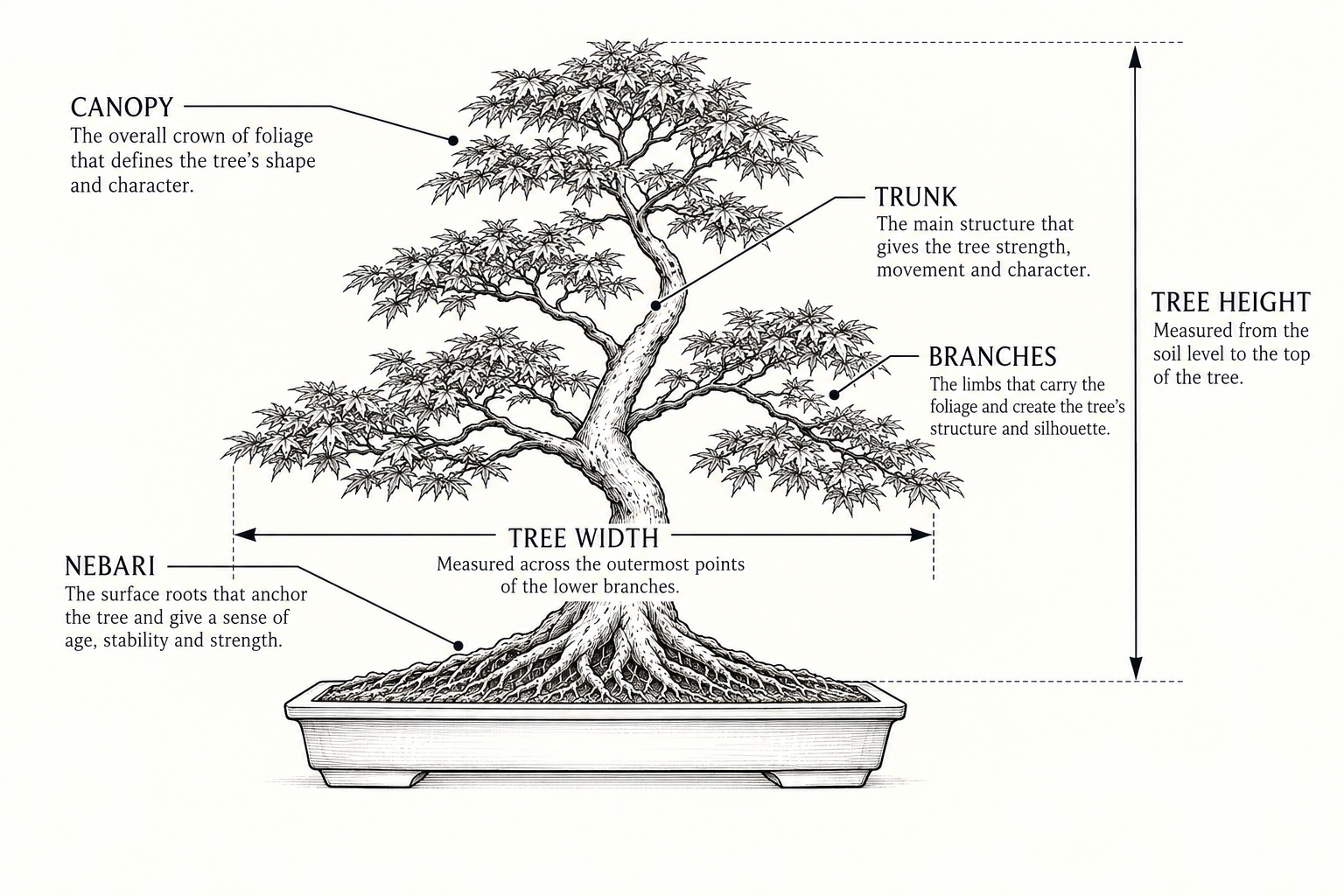
Proportions
Balanced proportions give a bonsai an appealing appearance and consideration should be given to the relationships between trunk height and trunk thickness, tree width and tree height and pot size and tree size.
Pot height
The pots height should be approximately equal to the diameter of the bonsai trunk at the transition of the root neck to the trunk, subject to the depth of the root ball.
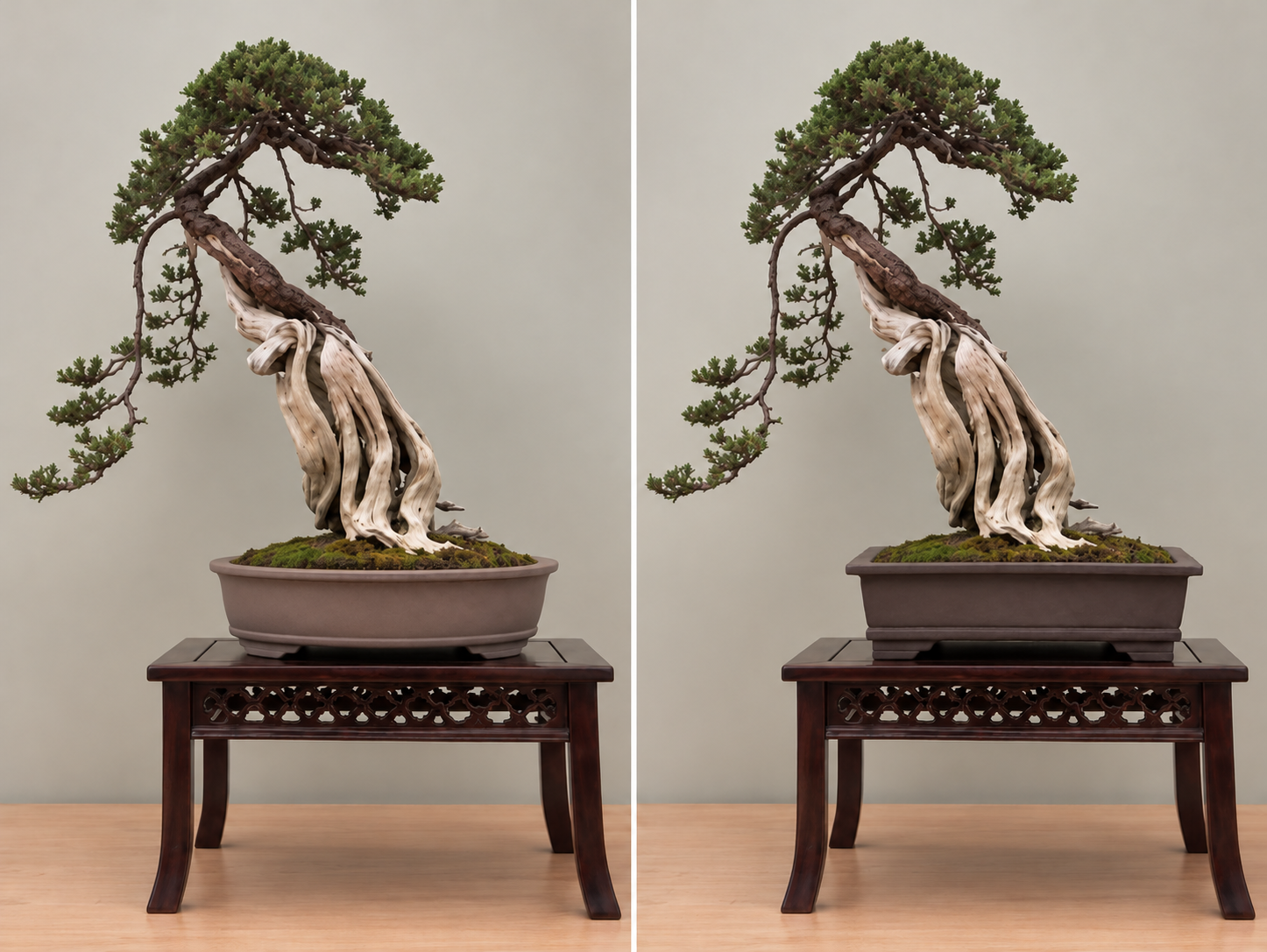
Wide trees
The pot length should be approximately 2/3rd of the tree width. So a tree that is 30cm wide would suit a pot 20cm long.
Tall narrow trees
The pot length should be approximately 2/3rd of the tree height. So a tree that is 60cm high and 30cm wide would suit a pot 40cm long.
Cascading trees
The pot should be tall enough so that the end of the tree does not touch the stand on which it is presented on.
Choosing a pot shape
Square, rectangular and hexagonal shapes are sharp in design and fall into the formal category. They are particularly suitable for both masculine tree forms and those with formal upright trunks. These pots normally look best with a wide crown profile.
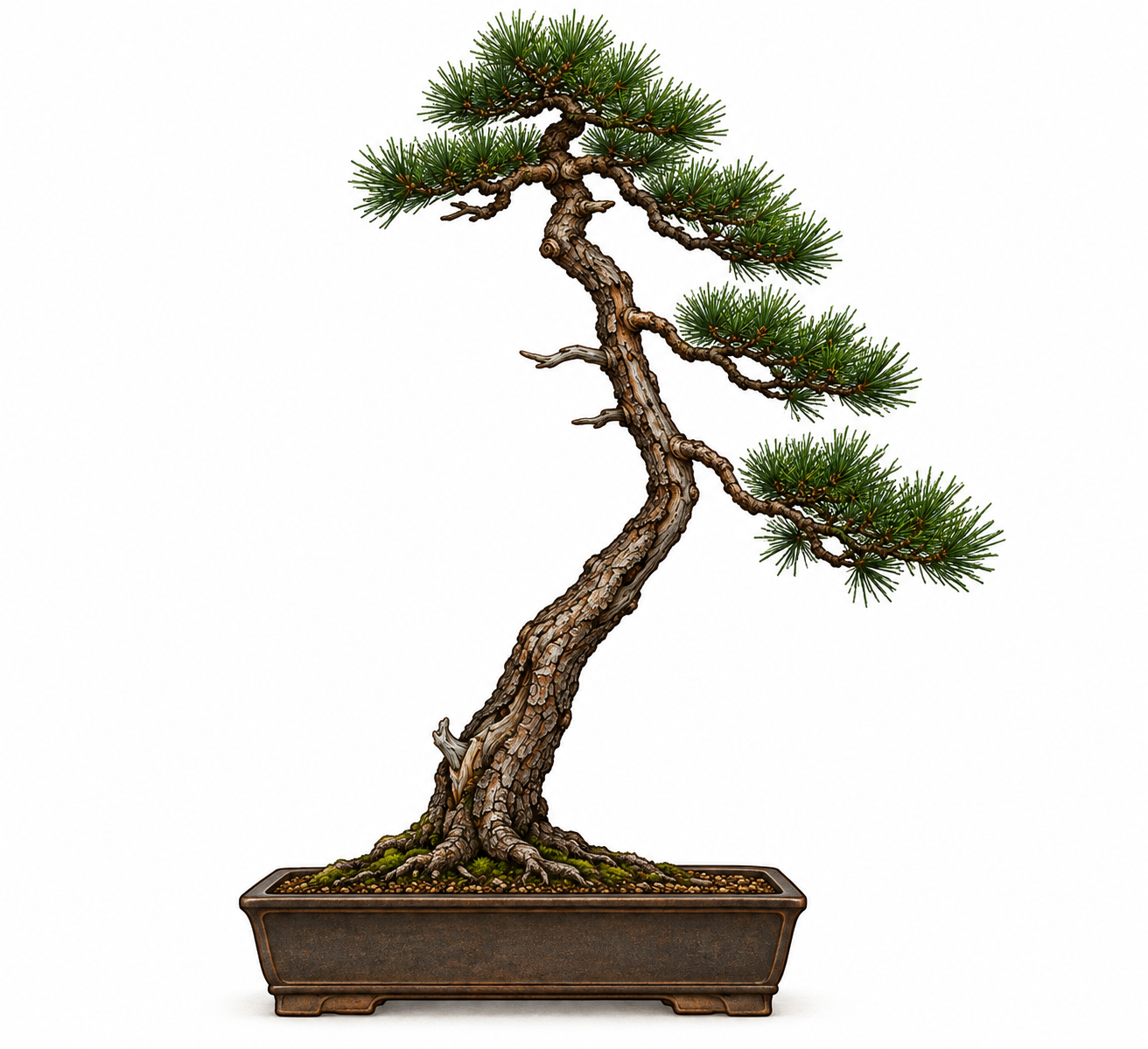
Scots pine (Pinus sylvestris),
Literati style
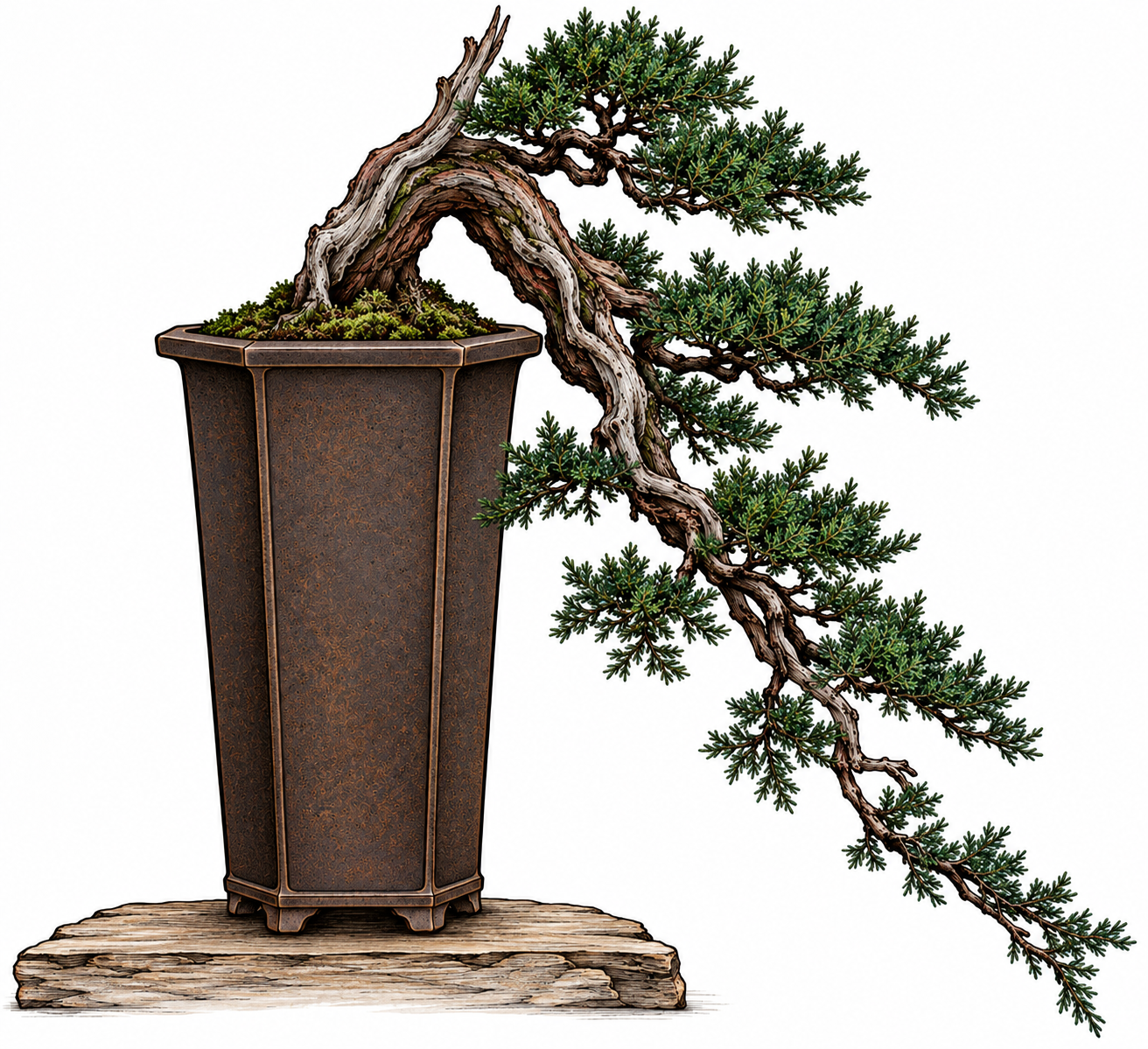
Chinese juniper (Juniperus chinensis),
Cascade style
Round and oval pots are softer in design and are generally considered the best match for trees with bent or twisted trunks due to their feminine look. These pots typically have a rounded or carved crown to maintain the softer more elegant look.
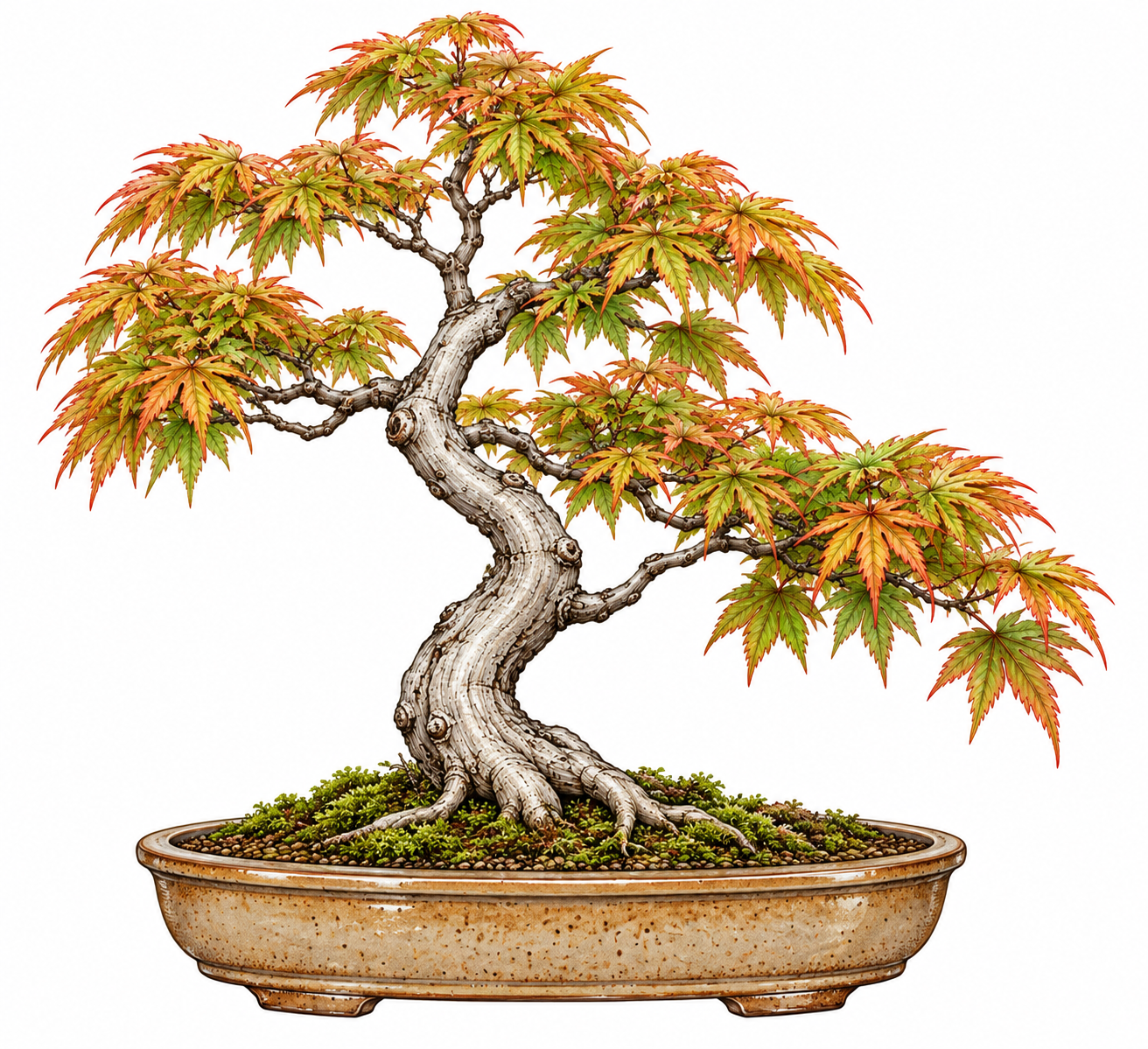
Japanese maple (Acer palmatum)
Informal Upright
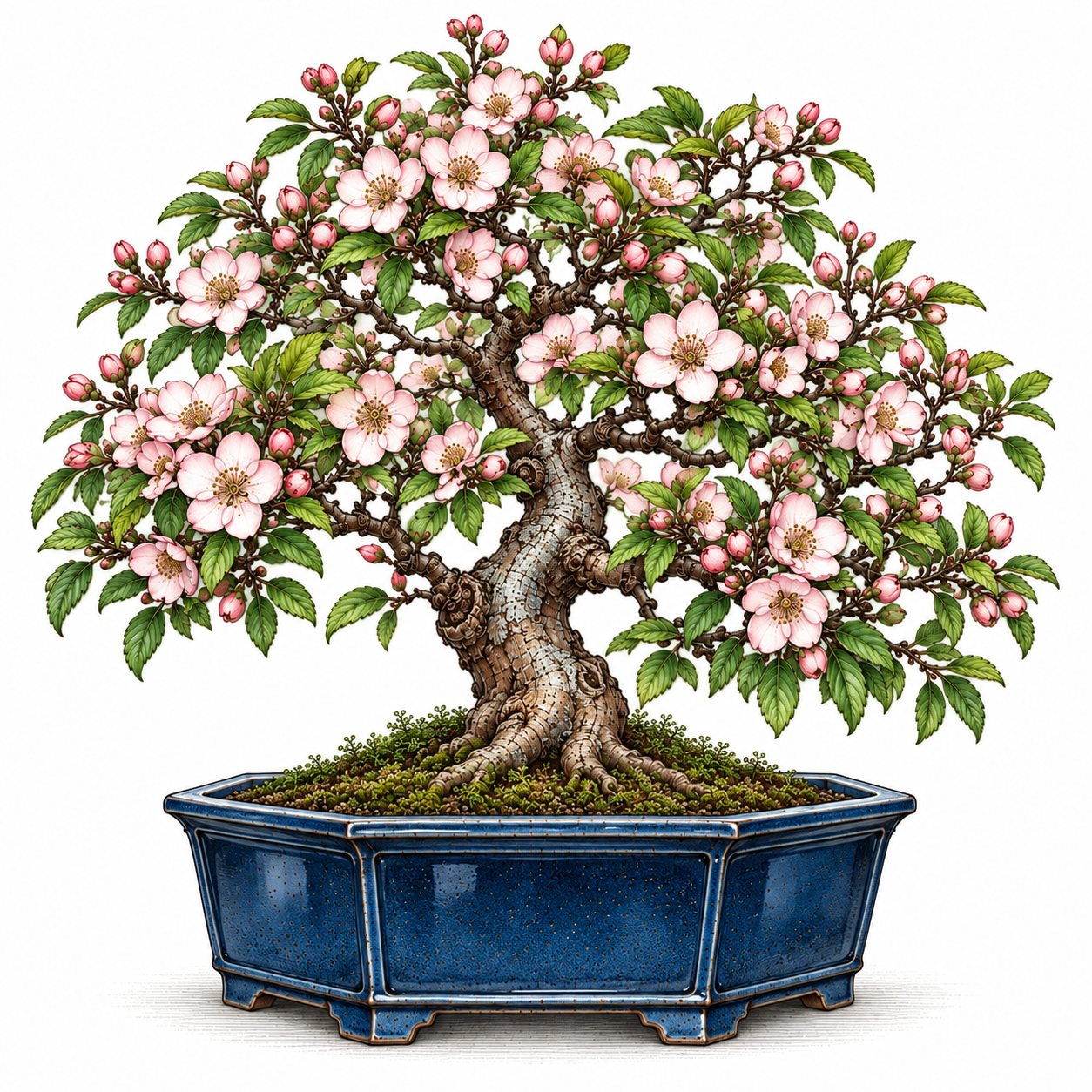
Japanese Quince (Chaenomeles japonica)
Informal Upright
Choosing a pot colour
If we follow current guidelines established some years ago by the Japanese Bonsai Association we can be assured of a harmonious look to our display. Some may reference the Colour Circle.
Coniferous trees - Juniper, Pine, Spruce, Cedar, Yew etc. Plain brown or red clay unglazed pots.
Deciduous trees - Beech, Hawthorn, Oak, Hornbeam, Cotoneaster, Chinese Honeysuckle etc. Cream, brown, blue, grey, amber, green matte/satin glaze.
Fruiting and flowering - Quince, Plum, Apricot, Crab Apple. Blue, orange, red, black and green gloss colours are often selected to complement the colour of the fruit or flower.
Exceptions
Mame bonsai trees (>10cm) and Shohin bonsai trees (>20cm) in height, offer a delightful exception to many of the traditional guidelines governing pot shape colour and decoration. Round, square, oval and hexagonal pots can all be appropriate, in colours ranging from subtle, earthy tones to bright and vibrant shades.
Painted and decorated pots, featuring Japanese and Chinese landscapes, flowers and other artistic motifs, are also common.
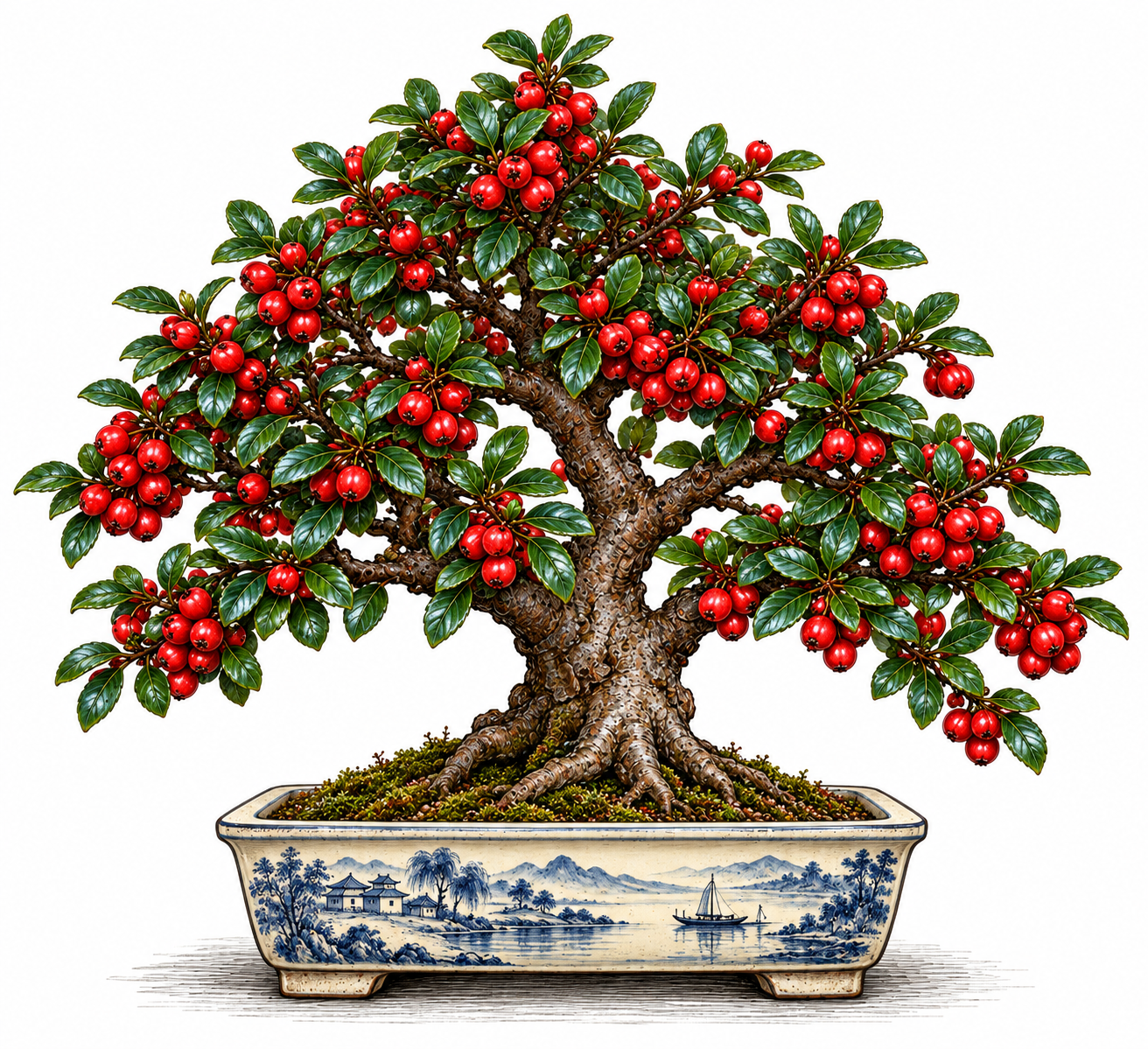
Mame size Cotoneaster
Informal Upright
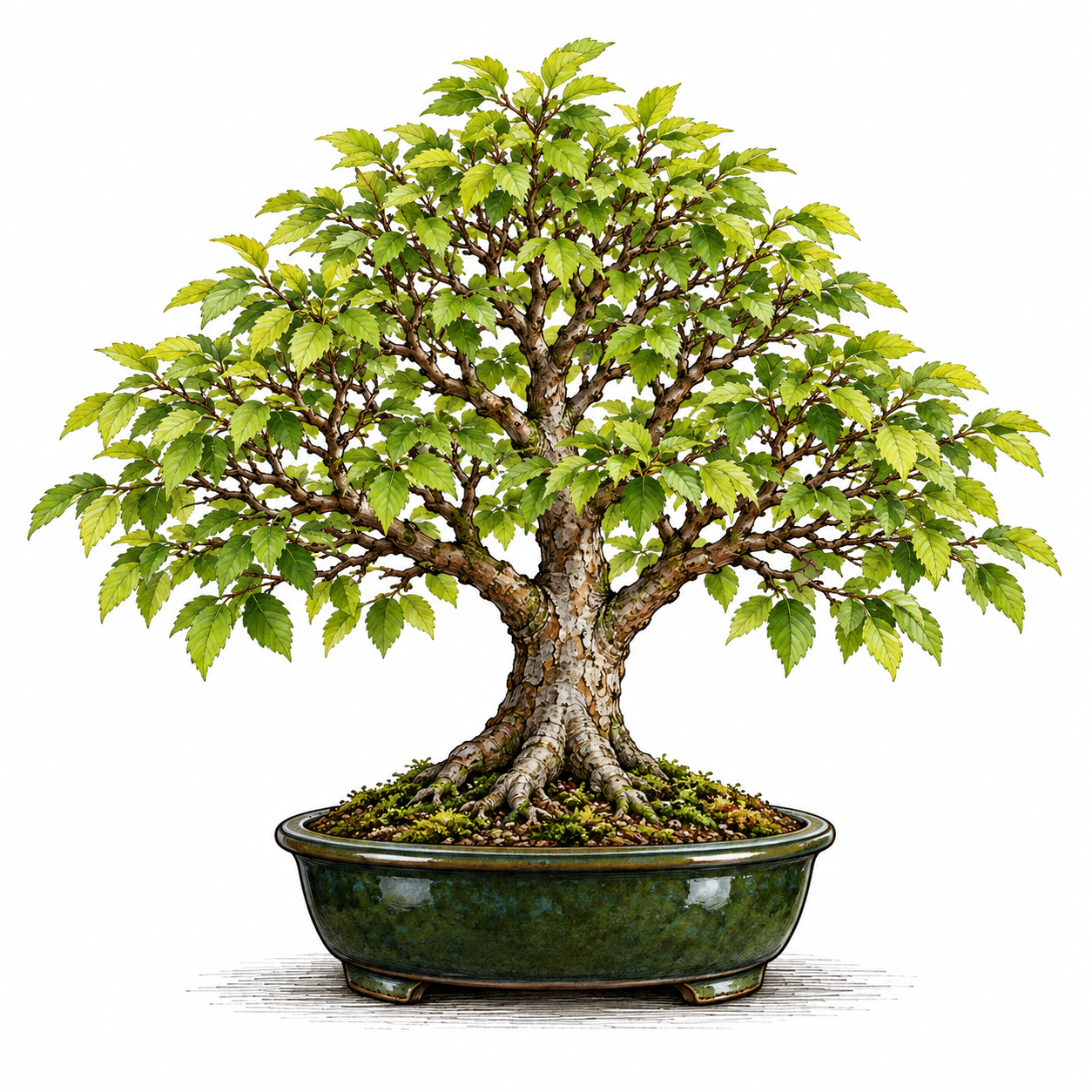
Shohin size Zelkova (Zelkova serrata)
Broom style
“The right pot is ultimately the one that appeals to you, and brings you pleasure, regardless of whether it follows convention”.
Traditional guidelines can provide useful inspiration, but they should never be treated as absolute rules.
The choice of pot is a personal one, shaped by individual taste, creativity and the relationship between the tree and its container.